Showing posts with label Triangle Shirtwaist Fire. Show all posts

Lessons Learned from the Triangle Shirtwaist Fire

According to Internet Media:
The booklet, “Don't Mourn, Organize,” features leaders from government, labor, academia and community-based public health and immigrant organizations. It is available for download as a PDF.

The booklet’s publication marks the centennial of the fire that tore through the Triangle Waist Co. near Washington Square in New York City on March 25, 1911, killing 146 workers – mainly immigrant women. The varied writers in the collection address how far we have come since that time in improving working conditions and what remains to be done.

“Outrage over the conditions that led to this tragedy resulted in a fundamental change in the way in which people viewed government,” said Joel Shufro, executive director of NYCOSH. “For the first time, it became legitimate for government to require employers to provide workers with safe and healthful working conditions, to prohibit child labor and to ensure that employers comply with fire codes and provide sufficient ventilation.”

Bill Henning, chairman of NYCOSH’s board of directors, added that the booklet “provides a perspective on what protections workers have won over the last 100 years – and, as importantly, what remains to be done to ensure that every worker has a safe and healthful workplace.”

Among the essays featured are those by David Michaels, assistant secretary of labor for OSHA; John Howard, director of the National Institute for Occupational Safety and Health; Denis Hughes, president of the New York State AFL-CIO; and Linda Rae Murray, president of the American Public Health Association.

Triangle Shirtwaist Fire still burns a century later

According to Internet Media:
At 3:40 p.m. Friday, Chicago time, it will be exactly 100 years to the minute since someone tossed a cigarette into a bin of scrap cloth on the 8th floor of the Asch Building on New York’s Lower East Side, touching off what for the last century has been known as the Triangle Shirtwaist Fire.

It was a Saturday, so only 600 of the usual 1,000 employees — 500 women and girls and 100 men — were working. Their 12-hour shift over, they had put their street clothes on, collected their pay envelopes — $6 a week — and were waiting for the bell. Ten minutes later the place would have been empty.

The fire raced through the 8th floor, fed by piles of lint, linen hanging on wires from the ceiling and oil stored in the open to keep the machines running. It spread to the 9th and 10th floors, sending panicked workers running to the two fire escapes. One was anchored to the outside of the building, down into the alley. The other was inside.

The building was 11 years old, considered both “modern” — it was served by four elevators — as well as “fireproof.” But the ladders between the levels of the outside escape were missing — those who fled there couldn’t get down. And the doors to the inside fire escape were locked, to prevent theft.

The first fire engine company to respond arrived in minutes, firemen dodging what at first they thought were bolts of cloth being tossed from the burning building.

They weren’t bolts of cloth, but workers leaping to escape the flames. The firemen raced to set up their ladders, but they needn’t have hurried — the ladders fell 20 feet short.

The streets filled with onlookers watching in horror as those trapped above were squeezed between burning and falling to death. Most were teenage girls from immigrant families — Italians, Russians, Germans; most “could barely speak English.”The weight of the women on the back fire escape tore it from its moorings and sent it crashing into the alley, killing everyone on it.

The crowd on the street shouted “don’t jump!” but the seamstresses had little choice.

Five girls watched from one window as the firemen tried to work a ladder to them but couldn’t reach. “They leaped together,” the New York Times reported the next day, “clinging to each other, with fire streaming back from their hair and dresses.”

A 13-year-old girl hung by her fingertips for three minutes from a 10th floor ledge before dropping to her death.

There was heroism. Three of the four elevator operators kept at their posts, making repeated runs to the smoky 8th floor, returning packed with survivors. When one operator finally fled screaming “fire!” into the street, a New York University law student took over and made four more trips before the flames destroyed the shaft.

It was all over in half an hour — 146 workers had died. Examining the charred bodies, the New York City coroner was seen “sobbing like a child.” There had been warnings aplenty, which the factory owners ignored.

“This is just the calamity I have been predicting,” said the city’s fire chief. “Look around everywhere, nowhere will you find fire escapes. ... Only last Friday a manufacturer’s association met on Wall Street to oppose my plan [for a] sprinkler system, as well as the additional escapes.”

That night at the morgue, another hellish scene unfolded as bereaved relatives gathered to identify loved ones, “the sobbing and shrieking mothers and wives and frantic fathers and husbands of those who had not been accounted for.” Many victims, burned beyond recognition, were identified only by the heel of a shoe, or the scar on a knee.

The next day, the police at the morgue turned away many curious New Yorkers: well-dressed businessmen and groups of schoolgirls who came to “see the sights.”

Ironically, the year before, the International Ladies Garment Workers had struck the Triangle, demanding higher wages and better working conditions, the first mass strike by women in the United States. The owners promised to meet their demands and the strike ended. No changes were made, of course — instead, one by one, those involved in the union were fired, and so were not there that fatal day, but lived to press for the reforms that came in the wake of the disaster.

The Asch Building was indeed fireproof — largely undamaged by the fire, it stands today, part of New York University.

Triangle owners Max Glanck and Isaac Harris were charged with manslaughter but acquitted. Their insurance company compensated them handsomely for their loss.

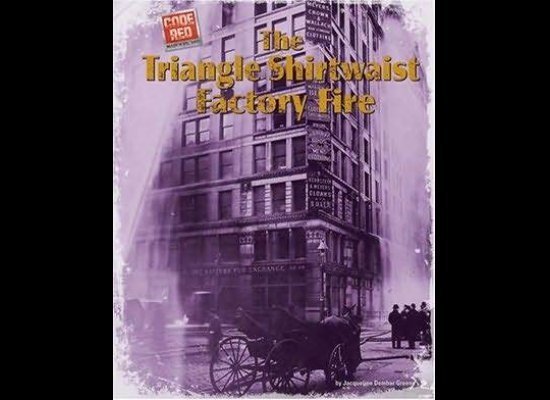
Triangle Shirtwaist Fire: 7 Books To Remember The 100th Anniversary

According to Internet Media:
One hundred years ago today, the Triangle Shirtwaist fire killed 175 people who were either trapped or leapt to their death to escape the flames. The fire started at the end of the work day and as mostly immigrant garment workers tried to escape, their way was blocked by a locked door. It took only 18 minutes to get the fire under control but it was too late. The 1911 fire became the touchstone for organized labor. Pictures of the aftermath are here, books on the tragedy are below. 
Related Posts Plugin for WordPress, Blogger...